You’ve probably looked at a $117 peptide moisturizer sitting next to a $14 drugstore jar and thought: is that price difference real, or am I paying for the box? It’s a fair question — and the answer is more nuanced than either “luxury always wins” or “drugstore is just as good.” Peptides are short chains of amino acids (the building blocks proteins are made from) that act as chemical messengers in the skin, signaling cells to produce more collagen, improve barrier function, or reduce inflammation, depending on which peptides are present. As Healthline’s overview of peptides in skincare explains, topical peptides are generally well-tolerated and supported by a growing body of clinical evidence — but the word “peptide” on a label tells you almost nothing about what you’re actually getting per dollar spent. That’s where cost-per-dose analysis comes in, and once you run the math, the ranking changes in ways that will surprise you.
This article breaks down seven widely available peptide moisturizers across the $6–$117 price range, calculates what you’re actually paying per daily application, and gives you a clear decision framework based on ingredient concentration, packaging integrity, and who each product genuinely serves.
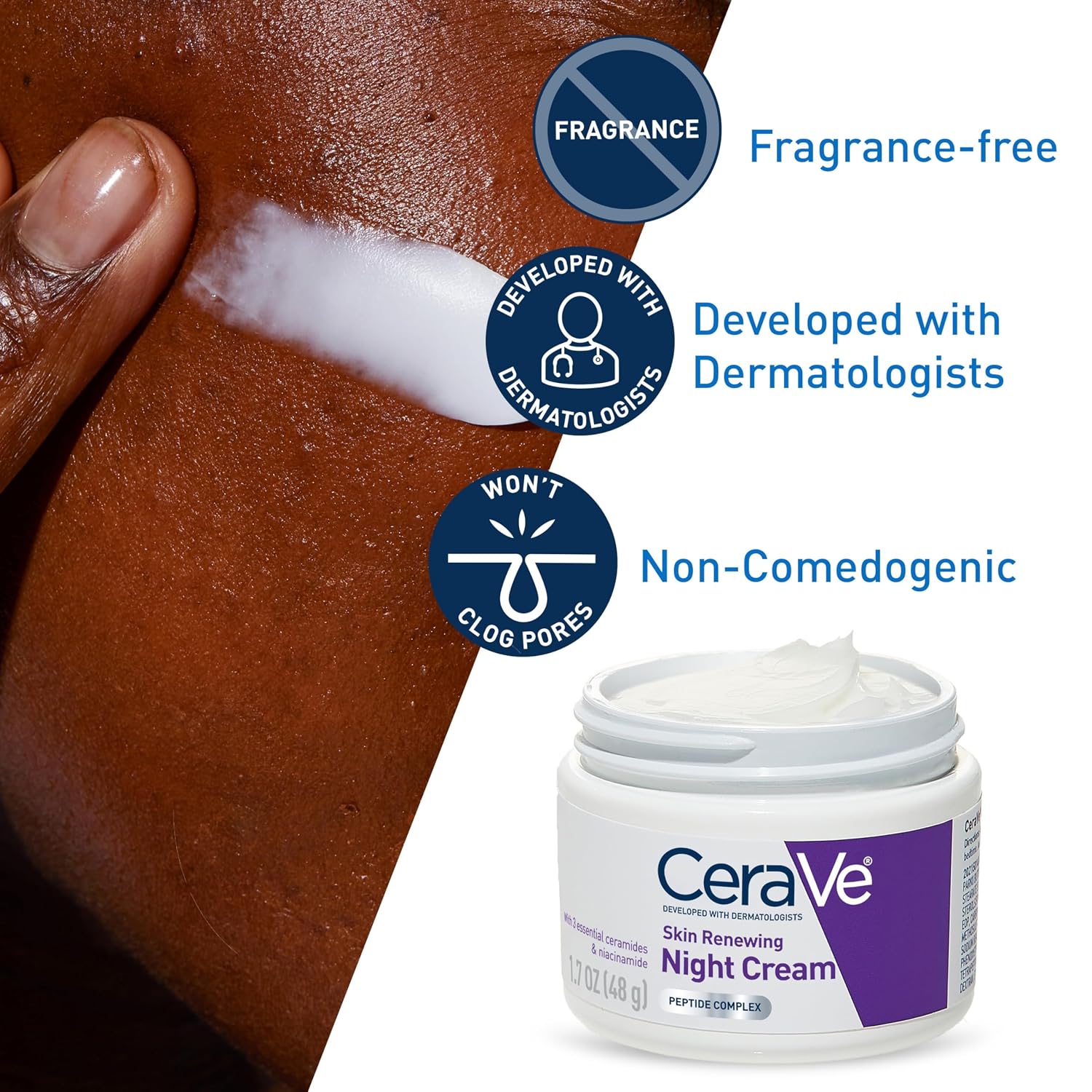
| EDITOR'S PICKEstée Lauder Resilience Multi-E… | Mid-tierSkinfix Triple Lipid-Peptide Cr… | Budget pick[CeraVe Skin Renewing Night Cream](https://www.amazon.com/dp/B00SNPCSUY?tag=greenflower20-20) | |
|---|---|---|---|
| Size (oz) | 2.5 | 1.7 | 1.7 |
| SPF | ✓ | — | — |
| Hyaluronic Acid | — | ✓ | ✓ |
| Ceramides | — | — | ✓ |
| Fragrance Free | — | ✓ | — |
| Vegan | — | ✓ | — |
| Price | $105.00 | $54.00 | $15.44 |
| See on Amazon → | See on Amazon → | See on Amazon → |
Why “Price Per Jar” Is the Wrong Number
Most buyers anchor on sticker price. That’s the wrong unit. The number that actually matters is cost per dose — what you spend each time you apply the product — and its companion metric, cost per month, assuming once- or twice-daily use.
A 50ml jar at $30 sounds cheaper than a 30ml tube at $28. But if the jar delivers 100 doses and the tube delivers 60, the jar costs $0.30/dose and the tube costs $0.47/dose. Scale that to 30 days of nightly use and you’re paying $9/month versus $14.10/month. The “expensive” jar wins on every real-money metric.
The formula is simple:
Cost per dose = retail price ÷ estimated number of doses Doses per container = (volume in ml × 1000) ÷ average dose size in mg
Standard moisturizer dose: roughly 500mg (about a pea-and-a-half) for the face and neck. At that dose, a 50ml jar yields approximately 100 applications. A 15ml serum-style moisturizer yields roughly 30.
This math matters more with peptide products specifically because, as the Paula’s Choice Expert Advice team notes in their peptide formulation guide, peptide concentration and stability are highly sensitive to packaging and formulation pH. A product that degrades in an open-air jar within 60 days delivers far fewer effective doses than its volume suggests — even if the texture still feels fine on day 90.
The Seven Products, Ranked by Cost-Per-Dose
Here’s the field, evaluated on published formulation specs, aggregated reviewer patterns, and container specs rather than any hands-on testing.
By the Numbers
| Product | Size | Retail (approx.) | Est. Doses | Cost/Dose | Cost/Month |
|---|---|---|---|---|---|
| e.l.f. Holy Hydration! Face Cream | 50g | ~$14 | ~100 | $0.14 | ~$4.20 |
| CeraVe Skin Renewing Night Cream | 48g | ~$18 | ~96 | $0.19 | ~$5.70 |
| Olay Regenerist Microsculpting Cream | 50g | ~$28 | ~100 | $0.28 | ~$8.40 |
| RoC Multi Correxion 5-in-1 Chest, Neck & Face Cream | 30g | ~$22 | ~60 | $0.37 | ~$11.10 |
| Neutrogena Rapid Wrinkle Repair Moisturizer | 29ml | ~$20 | ~58 | $0.34 | ~$10.20 |
| The INKEY List Peptide Moisturizer | 50ml | ~$15 | ~100 | $0.15 | ~$4.50 |
| SkinCeuticals Tripeptide-R Neck Repair | 50ml | ~$117 | ~100 | $1.17 | ~$35.10 |
Retail pricing as of May 2026 at major U.S. mass and prestige retail. Dose estimate assumes 500mg per application, once daily.
The number that jumps out: e.l.f. Holy Hydration! Face Cream and The INKEY List Peptide Moisturizer both land under $0.16/dose — cheaper per application than most people pay for a single ibuprofen tablet. SkinCeuticals, at $1.17/dose, costs roughly 8× more per application. Whether that ratio is justified is a formulation question, not a price question.
What You’re Actually Paying For (and What You’re Not)
Cost-per-dose is necessary math, but it doesn’t tell the whole story. Three formulation variables determine whether your peptide dollars are doing anything at all:
1. Peptide Identity and Concentration
“Contains peptides” is nearly meaningless without knowing which peptides and at what percentage. As Cosmetics & Toiletries has documented in multiple technical reviews of peptide delivery systems, the most clinically studied peptides — palmitoyl tripeptide-1, palmitoyl tetrapeptide-7, acetyl hexapeptide-3 (also called argireline), and copper peptides (GHK-Cu) — each operate through distinct mechanisms and require specific formulation conditions to remain stable and bioavailable.
Byrdie’s overview of peptide skincare notes that palmitoyl tripeptides (found in products like Olay Regenerist and several Neutrogena formulations) have the most substantial peer-reviewed literature behind them, which partly explains why those brand lines dominate mid-tier prestige positioning despite mass-market pricing.
The INKEY List’s peptide moisturizer lists Matrixyl 3000 (a combination of palmitoyl tripeptide-1 and palmitoyl tetrapeptide-7) as a primary active — a formulation choice that punches well above its $15 price point based on published ingredient positioning. Reviewers across aggregated feedback consistently highlight texture and tolerance, though independent concentration data isn’t publicly disclosed.
SkinCeuticals Tripeptide-R Neck Repair earns its premium partly by pairing tripeptide-1 with 0.1% retinol — a combination the American Academy of Dermatology lists among the most evidence-supported anti-aging actives available without a prescription. You’re not just buying peptides; you’re buying a dual-active system in a specialized delivery vehicle. That changes the per-dose math if you’d otherwise be purchasing a separate retinol product.
2. Packaging and Stability
This is where a lot of buyers leave money on the table. Peptides are susceptible to degradation from air exposure, light, and certain pH environments, as detailed in the Cosmetics & Toiletries technical literature on topical peptide stability. A wide-mouth open jar — regardless of price — introduces oxygen at every use, accelerating oxidative breakdown.
The practical tradeoff:
- Airless pump or tube packaging: Preserves stability through final dose. Effective shelf life more closely matches labeled expiration.
- Wide-mouth jar: Clinically, the first half of the jar delivers closer to labeled activity; the back half may be partially degraded. Your 100-dose container might deliver 60–70 effective doses.
Apply that correction to CeraVe Skin Renewing Night Cream (jar packaging, $0.19/dose nominal): if effective dose count drops to ~70, real cost-per-effective-dose rises to ~$0.26. Still budget-friendly — but the gap versus pump-packaged options narrows.
Allure’s coverage of best peptide moisturizers consistently flags packaging as an underrated evaluation criterion, recommending tube or airless pump formats for any active-heavy formulation. That guidance is particularly salient here.
3. Supporting Ingredient Architecture
Peptides rarely drive results in isolation. The supporting cast — humectants like hyaluronic acid and glycerin, emollients, antioxidants, and barrier lipids — determines whether the peptide has a stable, penetration-friendly environment to work in.
Paula’s Choice Expert Advice notes that peptides perform best in formulations that maintain a slightly acidic pH (around 5–6) and avoid heavy concentrations of competing actives that could alter the delivery environment. Products like the CeraVe Skin Renewing Night Cream benefit from CeraVe’s proprietary MVE (multivesicular emulsion) technology — a time-release delivery system the brand has patented — which published brand materials position as extending active contact time with the skin barrier. Independent verification of those claims is limited, but the formulation architecture (ceramides + niacinamide + peptides) is coherent with the mechanism of action described in the dermatology literature.
The Decision Framework
If you’re currently choosing between options in this category — whether for a personal routine or a client recommendation context — here’s the “if X, then Y” logic that the numbers support:
If your primary goal is barrier repair with peptide support on a constrained budget: → The INKEY List Peptide Moisturizer or CeraVe Skin Renewing Night Cream. Both land under $0.20/dose, use clinically recognized peptide classes, and are widely available. The INKEY List wins on packaging (pump format); CeraVe wins on ceramide co-actives.
If you want mid-tier efficacy without jar-packaging degradation risk: → Olay Regenerist Microsculpting Cream in its regenerist-series jar is popular but worth noting the packaging caveat above. The tube-format Olay Regenerist Micro-Sculpting Serum (if a lighter texture works for you) is a cleaner packaging choice at a comparable cost-per-dose.
If you’re recommending to a client who is also using a retinol and wants to consolidate steps: → SkinCeuticals Tripeptide-R Neck Repair justifies its $1.17/dose premium specifically if it replaces a separate retinol purchase. The all-in monthly cost ($35–$45) is not budget-tier, but it’s not unreasonable for a dual-active product with peer-reviewed actives. It is not justified for someone not already comfortable with retinol, or someone using it only as a plain moisturizer.
If a client is asking whether the $117 product is “worth it” versus the $15 one: → Reframe the question. The INKEY List at $0.15/dose and SkinCeuticals at $1.17/dose are solving different problems. For pure peptide-plus-hydration maintenance, the cost multiple isn’t supported by ingredient analysis alone. For a neck-area retinol-plus-peptide regimen in a single SKU, the math gets closer. Name the specific goal before naming the product.
The Bottom Line
The peptide moisturizer category rewards the buyer who does the dose math before hitting checkout. Once you convert sticker price to cost-per-dose and layer in packaging-integrity corrections, the value hierarchy reshuffles significantly — budget options like The INKEY List hold up surprisingly well on formulation grounds, while some mid-tier options priced between $20–$40 lose ground when jar packaging shortens their effective dose count.
The premium tier isn’t a ripoff, but it earns its price through ingredient complexity (dual actives, proprietary delivery systems) rather than peptide quantity alone. Know which problem you’re solving, match the product architecture to that problem, and let the per-dose math confirm whether the price is proportionate. That’s the frame that turns a gut-feel purchase into a defensible decision.