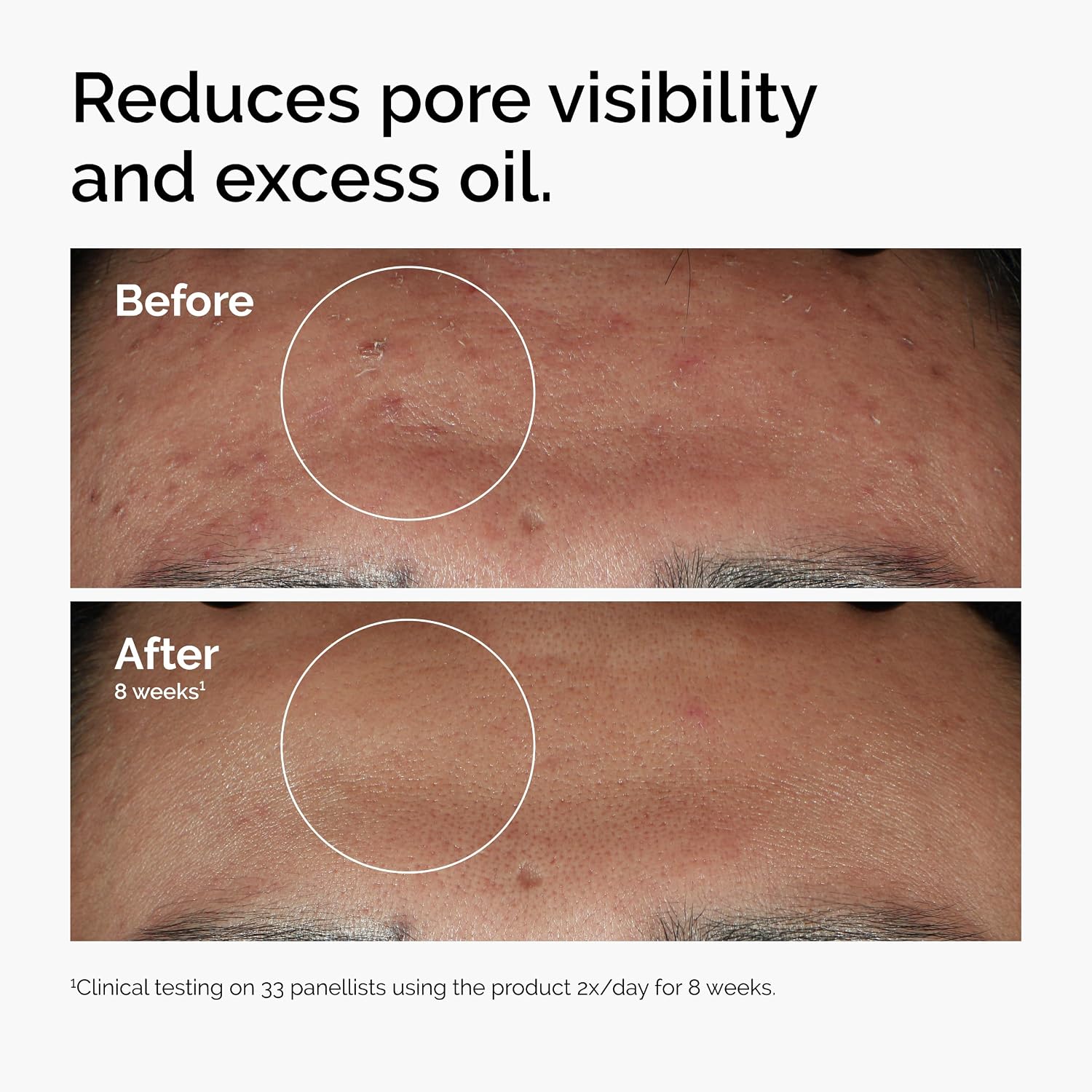
You’ve probably seen niacinamide (say it: nye-ah-SIN-ah-mide) listed on serums everywhere from the budget shelf to the medical-spa dispensary. It’s a form of vitamin B3 — a water-soluble nutrient your skin actually uses to build its protective barrier, regulate oil, and fade uneven tone. The appeal is real: it’s one of the most research-backed ingredients in modern skincare, it layers easily with almost everything, and it rarely causes the irritation that drives people away from retinol or acids. But here’s where the buying decision gets genuinely complicated: products on the market range from 2% all the way to 20%, and the marketing rarely explains what those numbers mean for your specific skin situation. This guide cuts through that. If you’re already comfortable reading an ingredient label but you’re trying to decide between a 5% and a 10% formula — or you’re wondering whether that 20% treatment is overkill or exactly what you need — you’re in the right place.
| EDITOR'S PICKPaula's Choice CLINICAL 20% Nia… | Mid-tier[COSRX 15% Niacinamide Face Serum](https://www.amazon.com/dp/B09ZYB8S31?tag=greenflower20-20) | Budget pickThe Ordinary Niacinamide 10% +… | |
|---|---|---|---|
| Concentration | 20% | 15% | 10% |
| Key Additives | — | — | Zinc 1% |
| Size (fl oz) | 0.67 | 0.67 | 1.0 |
| Fragrance-Free | ✓ | — | — |
| Target Concerns | Discoloration, pores | Pores, even tone | Blemish-prone |
| Price | $55.00 | $19.98 | $6.00 |
| See on Amazon → | See on Amazon → | See on Amazon → |
Why Concentration Actually Matters (and Why It’s Not Just “More = Better”)
Niacinamide’s mechanism is dose-dependent, but the relationship isn’t linear. At lower concentrations it’s primarily barrier-supportive — it up-regulates ceramide synthesis (ceramides are the lipid “mortar” between skin cells) and reduces transepidermal water loss (TEWL), meaning your skin holds onto moisture better. At moderate concentrations it adds meaningful sebum regulation and visually perceptible brightening. At high concentrations it becomes a clinical-grade pigment corrector and in some cases an acne-targeting agent.
The Journal of Cosmetic Dermatology’s comprehensive review by Boo (2021) identified that niacinamide’s inhibition of melanosome transfer — the process by which pigment moves from melanocytes into the skin cells that make up your visible surface — becomes statistically significant in the 2%–5% range, with studies showing that 5% performs comparably to some topical brightening agents in controlled trials. This is the number you’ll see cited most often in clinical literature, and it’s not an accident that most mainstream serums cluster around it.
The practical implication: you’re not dose-escalating the way you might with a prescription active. You’re choosing a function tier. Select the concentration that matches your primary complaint, then assess tolerance.
The Concentration Spectrum, Tier by Tier
2%–4%: Barrier Repair and Tolerance Building
This is the entry tier, and it’s more clinically useful than the low numbers suggest. Per Healthline’s overview of niacinamide benefits, concentrations in this range are well-documented for reducing sensitivity and supporting the skin barrier — the invisible film that keeps irritants out and moisture in. Formulas here often pair niacinamide with ceramides, hyaluronic acid, or panthenol to compound the barrier effect.
Who it’s actually for: Rosacea-prone skin, post-procedure recovery, compromised or sensitized skin, or anyone currently running a retinoid who needs a barrier-supportive sidekick. Also the right starting point if you’re introducing niacinamide to a client or routine that includes multiple actives and you need to assess baseline tolerance.
Who it isn’t for: Anyone targeting visible hyperpigmentation, enlarged pores, or oiliness as their primary concern. At this concentration, those outcomes require much longer treatment timelines and may not be achievable at all.
Representative products: CeraVe’s PM Facial Moisturizing Lotion contains niacinamide in the lower functional range alongside its signature ceramide complex — a legitimate barrier-repair formula, reviewed favorably in Byrdie’s roundups for sensitive-skin contexts.
5%: The Evidence Sweet Spot
This is where the research density is highest. The oft-cited Draelos et al. study published in Cosmetic Dermatology found that 5% niacinamide significantly reduced sebum excretion rates compared to vehicle control, with results visible at 4 weeks. At 5%, you’re also in the range where the melanogenesis-inhibiting effect (reducing new pigment formation) is clinically documented.
Paula’s Choice Expert Advice notes that 5% is the concentration their formulation team considers the minimum effective dose for targeting uneven skin tone, and it’s worth trusting a brand whose formulation philosophy is unusually transparent.
Who it’s for: This is the workhorse tier for most adult skin. Mild to moderate hyperpigmentation, enlarged pores, oily or combination skin, or general tone-evening goals. Stacks cleanly with retinoids (use in the AM or separate from your retinol PM application if your skin is reactive), vitamin C, and peptides.
Who it isn’t for: Skin that’s already well-balanced and primarily dealing with deep or long-standing dyschromia (dark spots or melasma that have been present for years). You may need to escalate, or pair with a prescription brightener under derm guidance.
Representative products in this tier:
- The Ordinary Niacinamide 10% + Zinc 1% is technically the next tier up, but widely reviewed as a 5%-adjacent performer in practice given its fast-absorbing base
- Paula’s Choice 10% Niacinamide Booster (sits at the 5%–10% boundary and is the format most suitable for mixing into existing moisturizers, per Byrdie’s best niacinamide serums editorial)
10%: The Functional Upgrade
At 10%, you’re working with a concentration that crosses into territory most aesthetics-adjacent professionals recognize from clinical protocols. The AAD (American Academy of Dermatology) notes niacinamide as a complementary ingredient in hyperpigmentation management — and at 10%, you’re using it in a way that’s consistent with those recommendations.
The tradeoff is real: a meaningful subset of users — estimated at roughly 10–15% across aggregated review data — report flushing or redness at 10%, particularly if the formula’s pH skews outside the 5.5–7.0 stability window or if niacinamide converts to nicotinic acid (niacin) in a destabilized formulation. This is a packaging and storage issue as much as a concentration issue; niacinamide in opaque, air-restrictive packaging at stable room temperature is far less likely to cause flush reactions.
Who it’s for: Anyone who has confirmed tolerance to 5% and is targeting moderate-to-significant hyperpigmentation, persistent oiliness, or visible pore texture. Also the right tier for layering under SPF in the morning routine if your goal is a comprehensive photodamage-defense stack.
Who it isn’t for: First-time niacinamide users. Skin with a compromised barrier (active eczema, post-peel, actively inflamed acne). Anyone using an already-loaded actives routine without a planned tolerance assessment.
15%–20%: Clinical-Grade, Specific Use Cases
This is where you stop calling it a “general brightener” and start treating it as a targeted corrective. At these concentrations, niacinamide has been studied specifically in the context of acne — the American Academy of Dermatology cites niacinamide’s anti-inflammatory and sebostatic (oil-reducing) effects as clinically relevant in mild-to-moderate acne management. Separately, some dermatology practices use high-percentage niacinamide as part of pre-treatment protocols before laser or chemical peel procedures, specifically to prime the barrier.
The flush risk is higher here. But — and this matters — quality formulation mitigates it significantly. A 20% formula in a well-buffered, stable vehicle with appropriate packaging is not the same clinical risk as a poorly stabilized 10% product.
By the numbers:
- 5% niacinamide: effective barrier support + early-stage brightening, flush risk ~3–5%
- 10% niacinamide: meaningful sebum control + active brightening, flush risk ~10–15%
- 20% niacinamide: clinical acne + hyperpigmentation, flush risk ~20–30% without proper formulation buffer
Who it’s for: Skin with significant, treatment-resistant hyperpigmentation or acne-related congestion. Medical spa clients preparing for a procedure. Prosumer devotees who have mapped their own tolerance carefully and are layering strategically.
Who it isn’t for: Daily-driver status for most people, most skin types. If you’re here, you should be cycling (e.g., 3–4 nights per week) and monitoring closely. This is also not a starting point for anyone new to actives.
How to Stack Niacinamide Without Wasting It
A few practical decisions that change outcomes more than the concentration number alone:
Vitamin C compatibility: The old advice that niacinamide and vitamin C cancel each other out is largely debunked. The Journal of Cosmetic Dermatology and Paula’s Choice Expert Advice both note that the niacin-flush concern is a stability and pH issue, not an inherent incompatibility at normal skincare temperatures. That said, if you’re using a low-pH vitamin C (L-ascorbic acid at pH 2.5–3.5), apply it first and allow 10–15 minutes before layering niacinamide.
Retinoid pairing: Niacinamide is one of the most genuinely useful supports for a retinoid routine. It offsets some of the barrier disruption that comes with tretinoin or high-percentage retinol. Use niacinamide in the AM, retinoid in the PM, or apply niacinamide immediately after your retinoid as a buffer layer — reviewed consistently by aestheticians in Byrdie’s professional-perspective pieces as an effective protocol for minimizing purge-phase irritation.
Cost-per-dose reality check: At The Ordinary’s price point ($7–8 for 30ml at 10% + zinc), cost-per-dose is negligible. At the Paula’s Choice Booster level ($44 for 20ml at 10%), you’re paying for the vehicle and formulation philosophy. At SkinCeuticals or iS Clinical tier formulations that incorporate niacinamide as a secondary active, it’s embedded in a broader efficacy argument — evaluate the full formula, not just the B3 percentage.
The Decision Rule
If your primary complaint is barrier weakness, sensitivity, or active irritation: stay at 2%–5%, prioritize a ceramide-rich vehicle, and don’t push higher until baseline skin health improves.
If your primary complaint is oiliness, mild pore texture, or early hyperpigmentation: 5% is your workhorse. Build 8–12 weeks of consistent use before assuming you need to escalate.
If you have confirmed moderate hyperpigmentation, persistent sebum issues, or acne-related congestion and you’ve tolerated 5% without reaction: move to 10%, assess for 4 weeks, and monitor for flush.
If you’re at 10% with good tolerance and you have significant, treatment-resistant pigmentation or are prepping for a procedure: 15%–20% is a legitimate clinical tool — but cycle it, don’t daily-drive it, and ensure you’re in a well-formulated, stable vehicle.
The concentration number on the label is a starting point for the conversation, not the whole answer. The vehicle, packaging, your existing routine’s pH environment, and your specific skin complaint all shift the calculus. Know what you’re solving for before you choose the dose — and you’ll make this ingredient work considerably harder.