You’re researching your next serum and you keep seeing “copper peptides” or “GHK-Cu” on ingredient lists. A friend who works at a med spa says it’s the ingredient she’d choose if she could only pick one. But when you start comparing products, the price range is absurd — anywhere from $15 to $200+ — and the labels give you almost nothing useful to compare. So: what actually is GHK-Cu (short for glycyl-L-histidyl-L-lysine copper complex, a small signaling molecule that occurs naturally in human plasma and helps regulate skin repair and regeneration), does the research hold up, and how do you tell a well-formulated serum from one that’s just riding the ingredient trend? That’s what this piece is for. We’ll walk through the science in plain terms, then get into the formulation details that separate signal from noise — concentration, pH, packaging, and ingredient conflicts — so you can evaluate any label on the shelf.
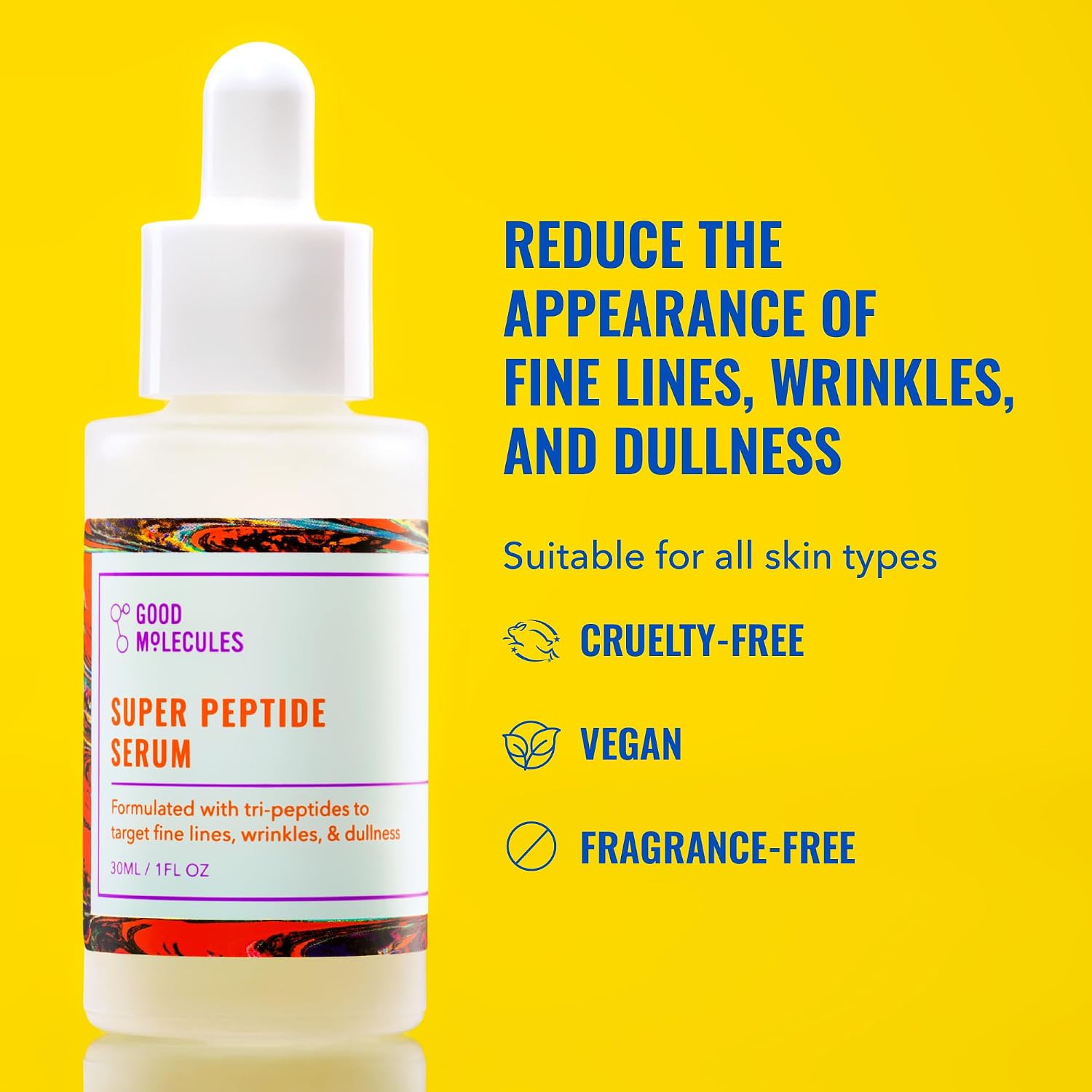
| EDITOR'S PICKPaula's Choice CLINICAL 1% Reti… | Mid-tier[COSRX 6X Peptide Collagen Skin…](https://www.amazon.com/dp/B0CCJ3SRB9?tag=greenflower20-20) | Budget pick[Good Molecules Super Peptide Se…](https://www.amazon.com/dp/B091MTKS35?tag=greenflower20-20) | |
|---|---|---|---|
| Peptide type | — | Copper Peptides, GHK-Cu | Copper Tripeptides |
| Copper peptide | — | ✓ | ✓ |
| Retinol | ✓ | ✗ | — |
| Vitamin C | ✓ | — | — |
| Size | 1 oz | 5.07 oz | 1 oz |
| Texture | Serum | Toner Serum | Serum |
| Price | $65.00 | $21.00 | $12.00 |
| See on Amazon → | See on Amazon → | See on Amazon → |
Why GHK-Cu Has Earned Serious Attention (and Why Hype Has Followed)
The research on GHK-Cu is unusually deep for a cosmetic ingredient. Loren Pickart, the biochemist who first isolated the tripeptide in the 1970s, spent decades characterizing its activity. The most cited summary of that work — Pickart and Margolina’s 2018 review in the International Journal of Molecular Sciences — documents over 4,000 human genes influenced by GHK-Cu, including pathways associated with collagen and elastin synthesis, antioxidant defense, and tissue remodeling. That’s not a narrow “this plumps fine lines” claim; it’s a broad regenerative signal.
Healthline’s overview of copper peptides for skin summarizes the clinical picture cleanly: GHK-Cu appears to stimulate collagen and glycosaminoglycan production, support wound healing, and reduce oxidative damage — with most evidence coming from in vitro (lab cell culture) and animal studies, plus a smaller body of human clinical trials. The mechanism is genuinely interesting. GHK-Cu acts partly as a copper-carrier, delivering ionic copper to enzymes like lysyl oxidase (which cross-links collagen fibers), and partly as a direct gene-regulator. That dual role is unusual and is a meaningful part of why dermatology researchers keep returning to it.
What the research does not do is validate every product on the market. Lab findings on purified GHK-Cu don’t automatically transfer to a product that lists “copper tripeptide-1” mid-label in a formulation with a destabilizing pH or in a clear glass bottle sitting under retail lighting. The gap between ingredient efficacy and product efficacy is where most of your buying decision actually lives.
The Formulation Variables That Determine Whether Your Serum Works
Think of this as the due-diligence checklist. Each variable is a potential deal-breaker.
Concentration. GHK-Cu is biologically active at low concentrations — studies typically use 1–10 parts per million in cell culture, which translates roughly to 0.001–0.01% in a finished formula. The cosmetic industry convention, confirmed by Paula’s Choice’s peptide guidance and consistent across published formulation literature, is that meaningful concentrations in topical products run from approximately 0.01% to 2%, with most well-regarded serums sitting in the 0.1–1% range. The problem: brands almost never disclose exact percentage. Your proxy is label position. In the EU and US, INCI (International Nomenclature of Cosmetic Ingredients) listing is required in descending order of concentration down to 1%; below 1%, ingredients can appear in any order. If “copper tripeptide-1” appears after preservatives like phenoxyethanol or after fragrance components, it’s almost certainly below 0.5% — possibly token-level. If it appears in the upper third of the list, that’s a more promising signal.
pH compatibility. Copper peptides are most stable in a slightly acidic to near-neutral pH range — roughly 5.5 to 7.0. This matters enormously for stacking decisions. Vitamin C serums (especially L-ascorbic acid formulations) are typically formulated at pH 2.5–3.5 to maintain stability of the vitamin C, which creates a problem: that strongly acidic environment can degrade and potentially destabilize GHK-Cu. The conventional guidance, echoed by formulation chemists writing for Cosmetics & Toiletries and confirmed in Byrdie’s ingredient analysis, is to avoid layering an L-ascorbic acid serum directly with a copper peptide serum in the same routine step. If you use both, separate them by AM/PM or allow adequate wait time between layers.
Packaging. Copper peptides are sensitive to oxidation and light degradation. Allure’s feature on copper peptides in skincare specifically calls out opaque, airless packaging as the standard to look for — pump dispensers that limit oxygen exposure and dark or opaque containers that block UV degradation. A copper peptide serum in a clear dropper bottle is a yellow flag; not automatically disqualifying (some formulas include antioxidant stabilizers), but worth scrutiny.
Ingredient conflicts. Beyond vitamin C, aggressive exfoliating acids at low pH can be problematic for the same reasons. Retinol is not inherently incompatible — it operates at a higher pH range and doesn’t directly degrade copper peptides — but layering multiple high-actives in one routine increases irritation risk without clear additive benefit for most users.
By the Numbers
| Variable | Meaningful threshold | Red flag |
|---|---|---|
| Concentration (copper tripeptide-1) | 0.1%–1% (upper third of INCI list) | Listed after preservatives or fragrance |
| Formulation pH | 5.5–7.0 | Below 4.0 (conflicts with L-ascorbic acid bases) |
| Packaging | Opaque, airless pump | Clear glass dropper bottle |
| Price-per-month (1 mL/day use) | $20–$60 for mid-tier; $80–$120 for premium | >$150/month — evaluate clinical data justification |
How the Major Products Stack Up on Formulation Criteria
Let’s apply the framework to the products you’re most likely comparing.
The Ordinary Buffet + Copper Peptides 1% — This is the entry point most practitioners and enthusiasts use as a baseline. The 1% copper peptide concentration is disclosed directly in the product name, which is unusually transparent. It’s formulated in a multi-peptide base with argireline, matrixyl, and hyaluronic acid. Reviewers at Byrdie and across aggregated skincare community feedback consistently note good tolerability and visible improvement in skin texture over 8–12 weeks. The packaging has historically been a dropper bottle, which is the format’s main compromise. At its price point (roughly $25–$30 for 30 mL, or approximately $15–$20/month at 1 mL/day), the cost-per-dose math is extremely favorable for what the label claims. The honest caveat: the multi-peptide base means you’re getting a stack, not a pure GHK-Cu vehicle — useful for most users, but harder to isolate the copper peptide contribution if you’re troubleshooting a routine.
Paula’s Choice 1% Retinol Treatment — Not a copper peptide product; worth noting only because it’s frequently stacked with copper peptide serums by Paula’s Choice devotees. Paula’s Choice’s own expert guidance explicitly addresses peptide-retinol layering and considers it compatible when applied in correct order.
NIOD Copper Amino Isolate Serum (CAIS) — Part of the Deciem family (same parent company as The Ordinary), this is positioned as a more refined copper peptide delivery system. NIOD doesn’t publish exact GHK-Cu concentrations, but formulation analysts at Cosmetics & Toiletries have noted the brand’s formulation philosophy prioritizes carrier optimization over raw concentration. At $60–$80 for 15 mL, the cost-per-month is substantially higher, and the clinical justification rests on proprietary delivery claims that can’t be independently verified without lab access. If you’ve already run The Ordinary Buffet + Copper Peptides through a full 12-week trial and you’re looking for incremental improvement, this is a reasonable next step. If you haven’t done that baseline first, the price premium is premature.
iS Clinical Active Serum — Not a copper-peptide-primary product, but it contains copper tripeptide-1 in a growth-factor-adjacent formulation marketed heavily through med spas. At $150+, the copper peptide concentration isn’t the product’s primary rationale — it’s part of a broader bioactive stack. Healthline’s summary of peptide serums notes this category of “multi-active professional serums” is hard to evaluate on any single ingredient basis. Appropriate for clients in clinical settings with professional guidance; less defensible as a first copper peptide product you’re buying on your own.
Stacking Strategy: Where GHK-Cu Fits in a Real Routine
The ingredient plays well in the evening, applied after cleansing and any toning step, before a moisturizer. The sequencing logic:
- If you use a vitamin C serum, put it in your morning routine. Reserve copper peptides for evening.
- If you’re on a retinol protocol, GHK-Cu serums are generally applied before the retinol (thinner texture first) or in alternating evenings if your skin is still adapting to the retinoid.
- Niacinamide is compatible and commonly layered with copper peptides — no known interaction at standard concentrations (2–10%).
Paula’s Choice peptide guidance and the formulation analysis at Cosmetics & Toiletries both support this general framework.
The Decision Rule
Here’s the “if X, then Y” this article is building toward:
If you haven’t tried a copper peptide serum yet: Start with The Ordinary Buffet + Copper Peptides 1%. The concentration is disclosed, the price supports a real 12-week trial without significant financial commitment, and it gives you a baseline to compare anything more expensive against. [PRODUCT:intermediate]
If you’ve done that baseline and want to evaluate a premium option: NIOD CAIS is the logical next comparison within the same formulation house. Run both for 8–12 weeks with consistent photography in the same lighting — that’s the only way to generate signal worth acting on.
If you’re a med spa professional building a home-use recommendation for clients post-procedure: The NIOD or iS Clinical tier makes sense contextually, because post-procedure skin is more permeable and clients in that setting typically have professional follow-up to guide them. The higher price point also carries more perceived clinical credibility, which matters for compliance.
If a serum lists copper tripeptide-1 after preservatives, uses a clear dropper bottle, and doesn’t disclose concentration: Pass. The formulation tells you what you need to know, and it’s not a compelling story.
The research on GHK-Cu is real. The formulation quality in the market is not uniform. Your job as an informed buyer is to close that gap — and now you have the framework to do it.