You’ve been using a glycolic acid toner for three months and your skin looks… fine. Not bad, not transformed — just fine. Meanwhile, someone in a forum swears the same ingredient gave them the best skin of their life, and someone else says it wrecked their barrier. Same ingredient. Wildly different results. What’s actually going on?
Here’s the short answer: the ingredient name on a bottle is only one of three or four variables that determine whether a chemical exfoliant — a product that dissolves the bonds holding dead skin cells together, rather than scrubbing them off — actually works. The others — pH (acidity level), concentration, and formulation design — are rarely printed on the label. And if you’re making purchasing decisions based on ingredient name alone, you’re working with maybe 30% of the information you need.
This guide breaks down the complete decision framework: what makes an AHA (alpha hydroxy acid, a water-soluble exfoliant that works on the skin’s surface) different from a BHA (beta hydroxy acid, an oil-soluble exfoliant that penetrates into pores), why the same percentage means different things in different products, and the clear “if X, then Y” logic you need to stop guessing and start choosing intentionally.
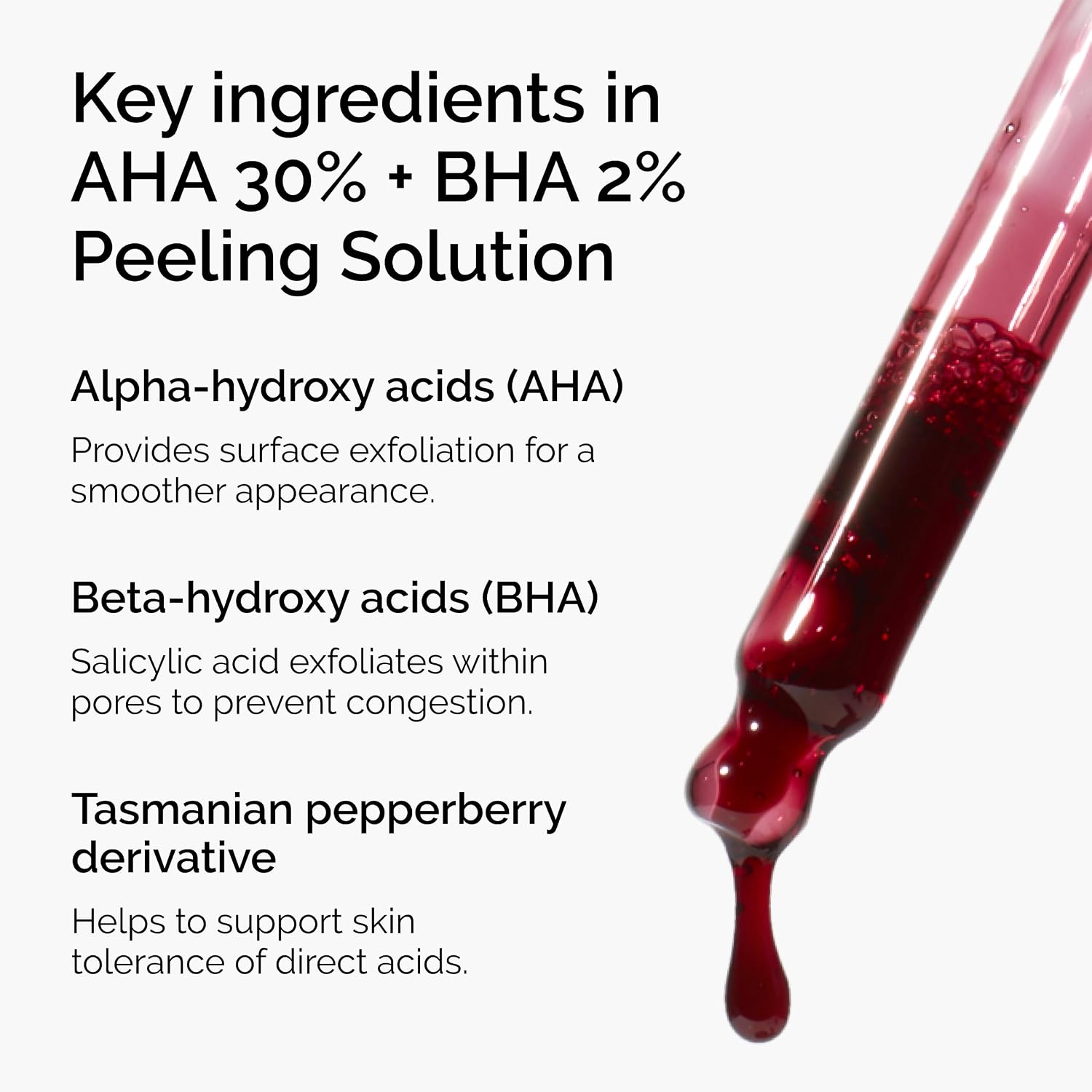
| EDITOR'S PICKPaula's Choice SKIN PERFECTING… | Mid-tier[The Ordinary Glycolic Acid 7% E](https://www.amazon.com/dp/B071914GGL?tag=greenflower20-20)… | Budget pick[The Ordinary AHA 30% + BHA 2% P](https://www.amazon.com/dp/B071D4D5DT?tag=greenflower20-20)… | |
|---|---|---|---|
| Active Acids | 2% BHA | 7% Glycolic Acid | 30% AHA + 2% BHA |
| Formulation Type | Liquid Exfoliant | Toner | Peeling Solution |
| Fragrance-Free | ✓ | — | — |
| Target Concern | Pores, Blackheads | Brightening | Exfoliating |
| Size | 4 Fl Oz | 8.11 Fl Oz | — |
| Price | $37.00 | $13.50 | $9.50 |
| See on Amazon → | See on Amazon → | See on Amazon → |
The Core Chemistry Split: Water vs. Oil Solubility
The AHA/BHA distinction isn’t marketing — it’s a real structural difference that determines where each acid does its work.
AHAs (glycolic acid, lactic acid, mandelic acid, malic acid) are water-soluble. They stay at the skin’s surface and work primarily on the outermost layer of dead skin cells — the stratum corneum. This makes them excellent for addressing texture, dullness, fine lines, and uneven tone. Glycolic acid, derived from sugarcane, has the smallest molecular size in this family, which means deepest penetration and fastest results — and the highest irritation potential. Lactic acid has a larger molecule, penetrates more slowly, and carries an added humectant benefit. Mandelic acid, larger still, is the gentlest entry point and is consistently recommended for sensitive or darker skin tones where post-inflammatory hyperpigmentation (PIH) — dark spots triggered by skin inflammation — is a concern.
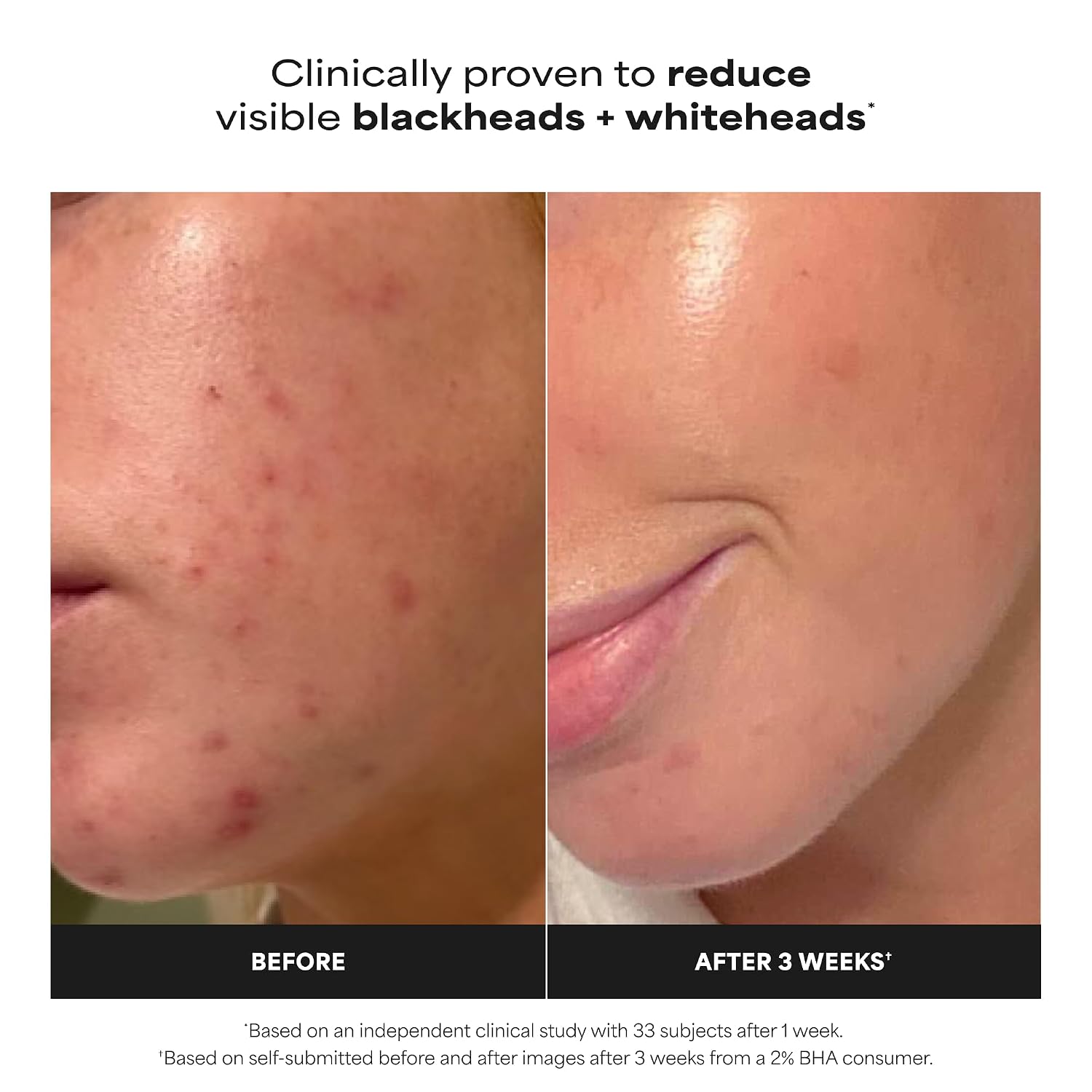
BHAs — in practice, almost always salicylic acid — are oil-soluble. That single property changes everything. Because sebum (skin’s natural oil) is lipid-based, salicylic acid can travel through it, down into the pore lining. This makes it the correct tool for blackheads, clogged pores, active breakouts, and congestion. It also carries mild anti-inflammatory properties, which is why it is generally better tolerated than glycolic acid at equivalent percentages.
Per Paula’s Choice Expert Advice (paulaschoice.com/expert-advice), in their published guidance on understanding AHAs and BHAs, the oil-solubility of BHAs is not a minor distinction — it determines the mechanism of action entirely. An AHA will not clear a clogged pore; a BHA will not resurface sun damage. Conflating them and picking one arbitrarily is one of the most common formulation errors in consumer routines.
pH: The Variable That Makes or Breaks Your Exfoliant
This is where most label-reading fails. Two products can list “10% glycolic acid” and deliver completely different results — because acid activity is not just about percentage, it’s about the free acid value, which is controlled by pH.
Hydroxy acids work by donating hydrogen ions that break the cellular bonds in the stratum corneum. At a higher pH, more of the acid is neutralized — in its salt form — and chemically inert. At a lower pH, more of it is in its active, free-acid form. The U.S. Food and Drug Administration’s consumer guidance document on alpha hydroxy acids in cosmetics notes that the agency has studied AHA formulations extensively in this context. The cosmetic-grade research is consistent: you need a pH below roughly 4.0 for meaningful exfoliation, and most effective leave-on AHA formulations operate between pH 3.0 and 4.0.
A product at 10% glycolic acid and pH 5.5 is essentially a mild moisturizer with a marketing claim. The same 10% at pH 3.2 is a legitimate exfoliant. Cosmetics and Toiletries (cosmeticsandtoiletries.com), in their formulation coverage of hydroxy acid exfoliants, notes that manufacturers have significant latitude here — a “10% AHA” label is not a standardized guarantee of free acid value.
What to do with this: Look for brands that publish pH in their documentation or on their site. Paula’s Choice publishes pH ranges for most actives. Deciem — parent company of The Ordinary and NIOD — publishes formulation data openly. If a brand won’t tell you the pH of their AHA, that silence is itself informative.
By the Numbers: Acid Reference Table
| Acid | Typical Effective Range | Effective pH Window | Key Use Case |
|---|---|---|---|
| Glycolic acid | 5–10% (consumer) | 3.0–4.0 | Resurfacing, fine lines, dullness |
| Lactic acid | 5–12% | 3.2–4.2 | Texture + mild brightening, sensitive skin |
| Mandelic acid | 5–10% | 3.5–4.5 | PIH-prone and reactive skin |
| Salicylic acid (BHA) | 0.5–2% | 3.0–4.0 | Congestion, acne, oily/combo skin |
Sources: Cosmetics and Toiletries formulation coverage (cosmeticsandtoiletries.com); Paula’s Choice Expert Advice (paulaschoice.com/expert-advice); Healthline, “Salicylic Acid vs. Glycolic Acid: Which Is Better for Your Skin?”
Concentration: More Is Not Always More
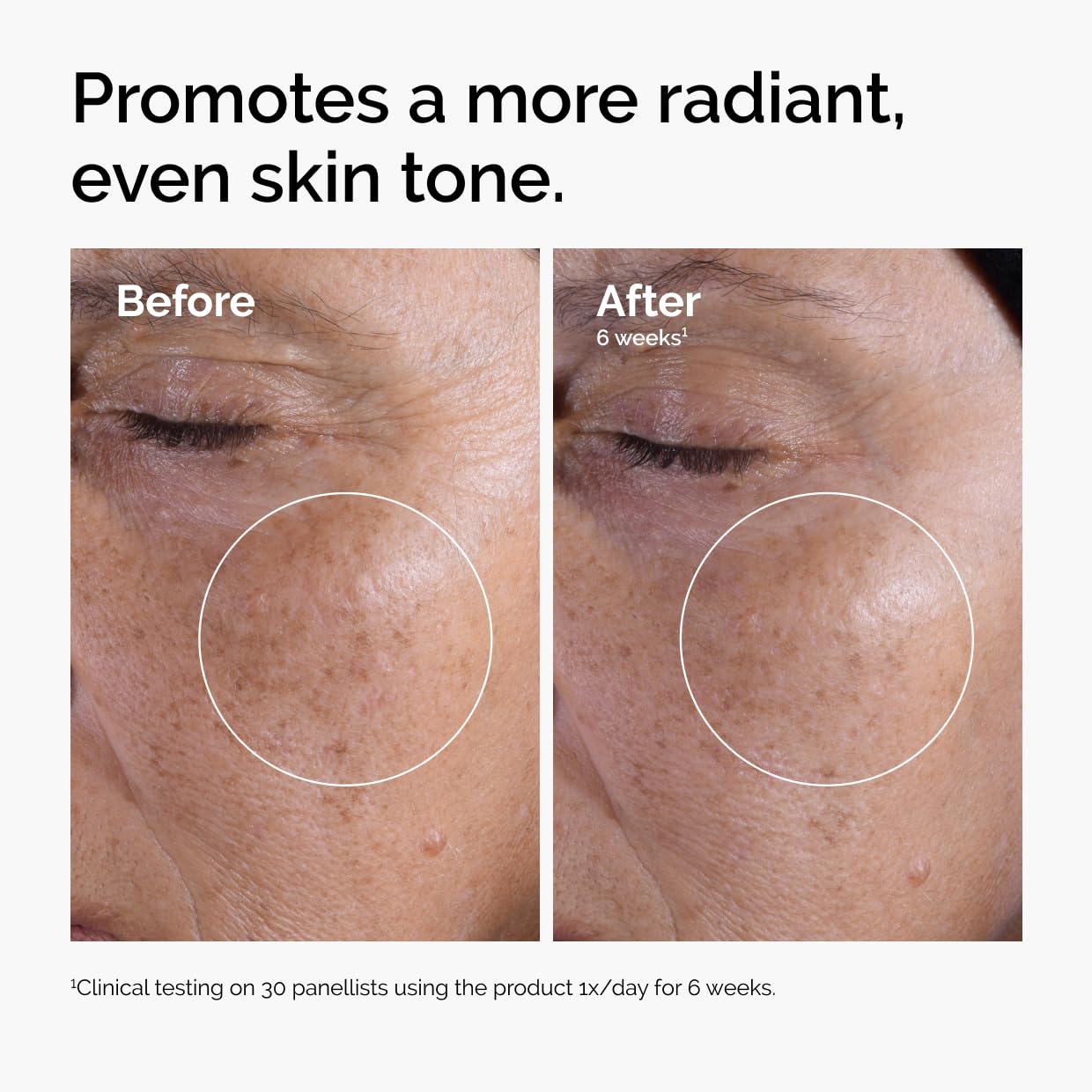
Skincare marketing leans hard on percentages. “30% AHA” sounds impressive. It is also, for most daily-use consumers, an unnecessary irritation risk when the actual free acid value at the right pH is the determining variable.
Healthline, in their comparison of salicylic acid versus glycolic acid, notes that salicylic acid reaches its clinical ceiling for most acne-related benefits at around 2% — the FDA’s maximum for OTC acne claims. Pushing above that doesn’t meaningfully increase efficacy; it increases dryness and barrier disruption. Similarly, the American Academy of Dermatology (aad.org), in their published guidance on chemical exfoliants, notes that cosmetic-grade glycolic acid above 10% in leave-on formulations carries increasing photosensitivity risk and should prompt concurrent SPF discipline — a daily sunscreen habit that is non-negotiable with any acid use.
The practical decision frame here is frequency over concentration. A well-formulated 7–8% glycolic acid product used consistently delivers better outcomes than a 20% product used inconsistently because of irritation. Byrdie (byrdie.com), in their explainer on the difference between AHA and BHA exfoliants, makes this point explicitly: for most people building a routine, the discipline of consistent, lower-percentage use outperforms occasional high-percentage application.
The exception is professional-grade peels — in-office treatments in the 20–70% range that are applied under controlled conditions, timed, and neutralized. These are a categorically different product class with different risk profiles, and they are not what we are evaluating here.
Formulation Context: The Rest of the Product Matters
pH and concentration are the two most underweighted variables. The third is what else is in the formula — and this determines both tolerability and results.
Delivery vehicle: A gel or toning solution penetrates differently than a cream base. If you are layering an AHA toner under a moisturizer with a high pH — many contain sodium hydroxide or potassium hydroxide as stabilizers — the moisturizer can partially neutralize the acid before it has finished working. The standard guidance from formulation-focused coverage: apply your AHA or BHA first to clean, dry skin, wait at least 60–90 seconds, then layer other products.
Buffering agents: Some formulations deliberately buffer — partially neutralize — their acids for tolerability. This reduces irritation but also reduces activity. Brands targeting sensitive skin often trade some efficacy for gentleness. That is a real tradeoff, not a flaw, but worth understanding so you can calibrate expectations.
Complementary ingredients: Well-designed exfoliant products often include barrier-supportive ingredients — hyaluronic acid, ceramides, niacinamide — to offset the stripping potential of repeated acid use. Products that include ceramides or panthenol alongside their acids show consistent reviewer feedback for being better tolerated than stripped-down formulations at similar percentages.
Packaging: Light and air stability matter. Formulations that combine acid exfoliation with antioxidants can degrade. Opaque, airless pump packaging earns its price premium for active-heavy formulas. Clear bottles are a flag worth noting.
The Decision Framework: If X, Then Y
This is where the chemistry becomes a shopping decision. The three tiers below reflect real product-category tiers by price, accessibility, and formulation sophistication — not arbitrary ranking.
Budget-Tier Picks: Entry-Level Acids for New Routines
If you are new to chemical exfoliants or working with a limited budget, the priority is finding a product at an effective pH with a moderate concentration you can use consistently without barrier disruption. At this tier, lactic acid at 5–8% and salicylic acid at 1–2% in rinse-off or leave-on formats are the safest entry points. Look for drugstore brands that publish or publicly confirm their pH, and pair with a non-negotiable daily SPF. Byrdie’s AHA/BHA coverage notes that consistent use at moderate percentages outperforms intermittent use of higher-percentage formulas for most consumers.
The
$9.50
In stock on Amazon
Check price on AmazonMid-Tier Picks: Verified pH, Transparent Formulation Data
At the mid-tier, the differentiator is formulation transparency. Brands like The Ordinary (Deciem) and Paula’s Choice publish pH ranges and full ingredient rationale. Paula’s Choice Expert Advice documentation on AHAs and BHAs is one of the more thorough consumer-facing formulation resources available and directly supports their product line’s positioning. At this tier you are paying partly for the documented formulation confidence — knowing the free acid value is actually in the effective range — and partly for complementary ingredients like ceramides or niacinamide that support the barrier alongside the exfoliant. For congestion and acne, a 2% salicylic acid BHA toner from a brand that confirms pH is the archetype product here.
The
$13.50
In stock on Amazon
Check price on AmazonPremium-Tier Picks: Advanced Formulations and Professional-Adjacent Results
Premium exfoliant formulations earn their price through one or more of the following: proprietary delivery systems that increase penetration without increasing irritation, clinically studied ingredient combinations, or pharmaceutical-grade purity and stability controls. At this tier, mandelic acid formulations designed specifically for Fitzpatrick skin types IV–VI — where PIH risk is highest — represent a genuine clinical rationale for the price premium. Byrdie’s coverage of chemical exfoliants for darker skin tones specifically flags mandelic acid as the preferred AHA entry point in this population, a recommendation consistent with American Academy of Dermatology commentary on chemical exfoliation for pigmented skin. Airless pump packaging and opaque bottles are expected at this price point, not optional.
Paula's
$37.00
In stock on Amazon
Check price on AmazonSkin-Type Decision Matrix
If your primary concern is texture, dullness, or early fine lines: AHA is your category. Start with lactic acid at 5–10% if you are newer to acids or have reactive skin. Move to glycolic acid at 7–10% once tolerance is established. Verify the brand publishes a pH below 4.0, or choose a brand with documented formulation data.
If your primary concern is congestion, blackheads, or acne: BHA is your category. Salicylic acid at 1–2% in a leave-on toner or serum format. Exceeding 2% OTC will not increase efficacy; it will increase dryness and barrier disruption. Look for formulations that include soothing ingredients — niacinamide, zinc, or centella asiatica — to manage co-occurring inflammation.
If you want to use both: Sequence or alternate rather than stacking simultaneously. Some formulations combine low-percentage AHA and BHA in one product. These can work well if both are at effective pH and concentrations, but many “combination” products underperform on at least one axis. Review formulation data before assuming the combination is optimized.
If you have darker skin or known PIH sensitivity: Mandelic acid first. Its larger molecule size means slower, more even exfoliation with less acute inflammatory response. This recommendation appears consistently in Byrdie’s chemical exfoliant coverage and in American Academy of Dermatology guidance on chemical exfoliation for pigmented skin.
If a product does not disclose pH: That is a pass, or at minimum a lower-confidence purchase. Brands that formulate for actual efficacy — not just label claims — publish their numbers.
The Bottom Line
The bottle tells you the ingredient. It rarely tells you whether that ingredient is in a form your skin can actually use. pH and free acid value are the hidden variables that explain why two products with identical percentages can produce completely different results. Concentration matters — but it is capped, and more is frequently counterproductive. The formulation context around the acid, including vehicle, buffers, and complementary ingredients, is what separates a product that delivers consistent results from one that works for some reviewers and not others.
The framework is straightforward: match the acid type to the concern — surface resurfacing versus pore-clearing — verify or infer the pH, choose a concentration you can use consistently without barrier disruption, and pay attention to the full formulation. That is the information the label does not give you. Now you have it.